

A city that cycles with the young, old and dead
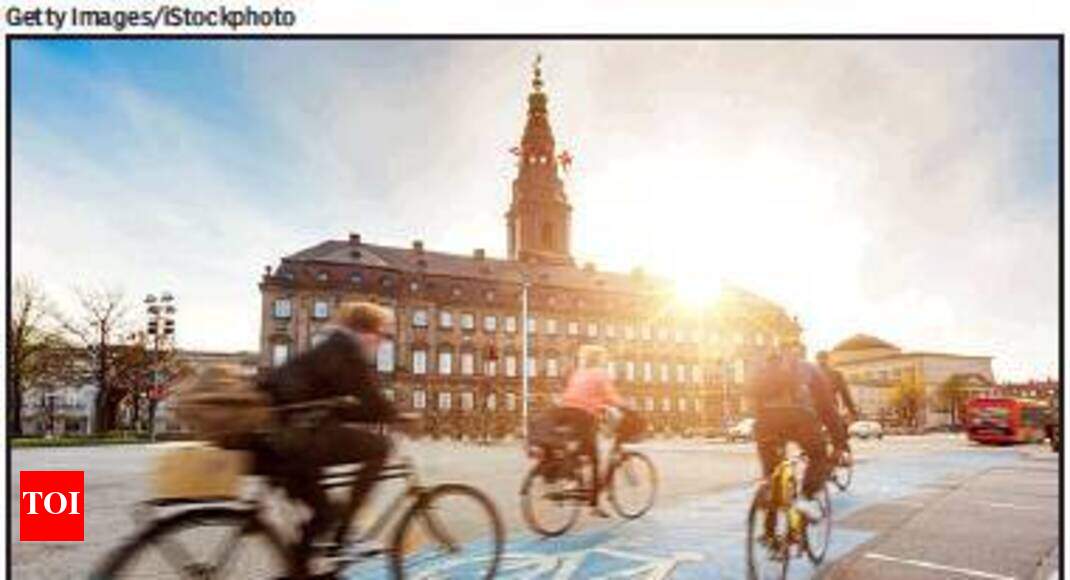
Natalie Gulsrud scoffs at these details. It is nearing 4 pm, darkness already bringing finality to this bleak November afternoon. Like tens of thousands of other people in Denmark’s elegant yet frequently dank capital, she pedals her way through her daily rounds, relying on the world’s most advanced and widely used network of bicycle lanes. She does not own a car. She does not want a car.
She settles her bag into the front compartment of her cargo bike — a three-wheeled contraption built for hauling children and groceries that is something like the sport utility vehicle of local family transportation.
On the other side of the Atlantic, New York has just proclaimed intentions to spend $1.7 billion to greatly expand the city’s now-convoluted and treacherous patchwork of bicycle lanes. The mission is draped in high-minded goals — addressing climate change, unclogging traffic and promoting exercise.
Copenhagen’s bicycle setup has been propelled by all of these aspirations, but the critical element is the simplest: People here eagerly use their bicycles — carrying the young, the infirm, the elderly and the dead — because it is typically the easiest way to get around.
A former neighbour of Gulsrud’s operates a bicycle mortuary service, pedaling the departed to their final destination in caskets. People use bikes to go to the airport, sometimes pushing wheeled suitcases alongside them while they roll.
Some 49% of all journeys to school and work occur by bicycle. 55% of the bikers say it is more convenient than the alternatives. Only 16% cited environmental benefits. “It’s not when you’re late for work that you want to save the planet,” said Marie Kastrup, who heads the city’s bicycle program.
In a shopfront done up like a Parisian boutique, a retailer, Larry vs Harry, displayed its sleek, shiny two-wheeled cargo bike, The Bullitt, which sells for as much as 43,450 Danish kroner (about $6,500).
Nearby at Nihola, a showroom displays compartments big enough to fit four children. One can carry a wheelchair. Front doors swing open, allowing toddlers and dogs to climb in. Not long ago, modernity felt bound for something like the Jetsons, with families zipping around on jetpacks. But maybe this is the future, a resumption of the past, upgraded by contemporary design.
[1][2][3]
References
- ^ Fahrenheit (timesofindia.indiatimes.com)
- ^ climate change (timesofindia.indiatimes.com)
- ^ Bullitt (timesofindia.indiatimes.com)
from Europe News Headlines, Latest Europe News and Live Updates - Times of India https://ift.tt/33DPy6N
Post a Comment